Why Most Software Projects Fail (And It's Usually Not Because of Code)
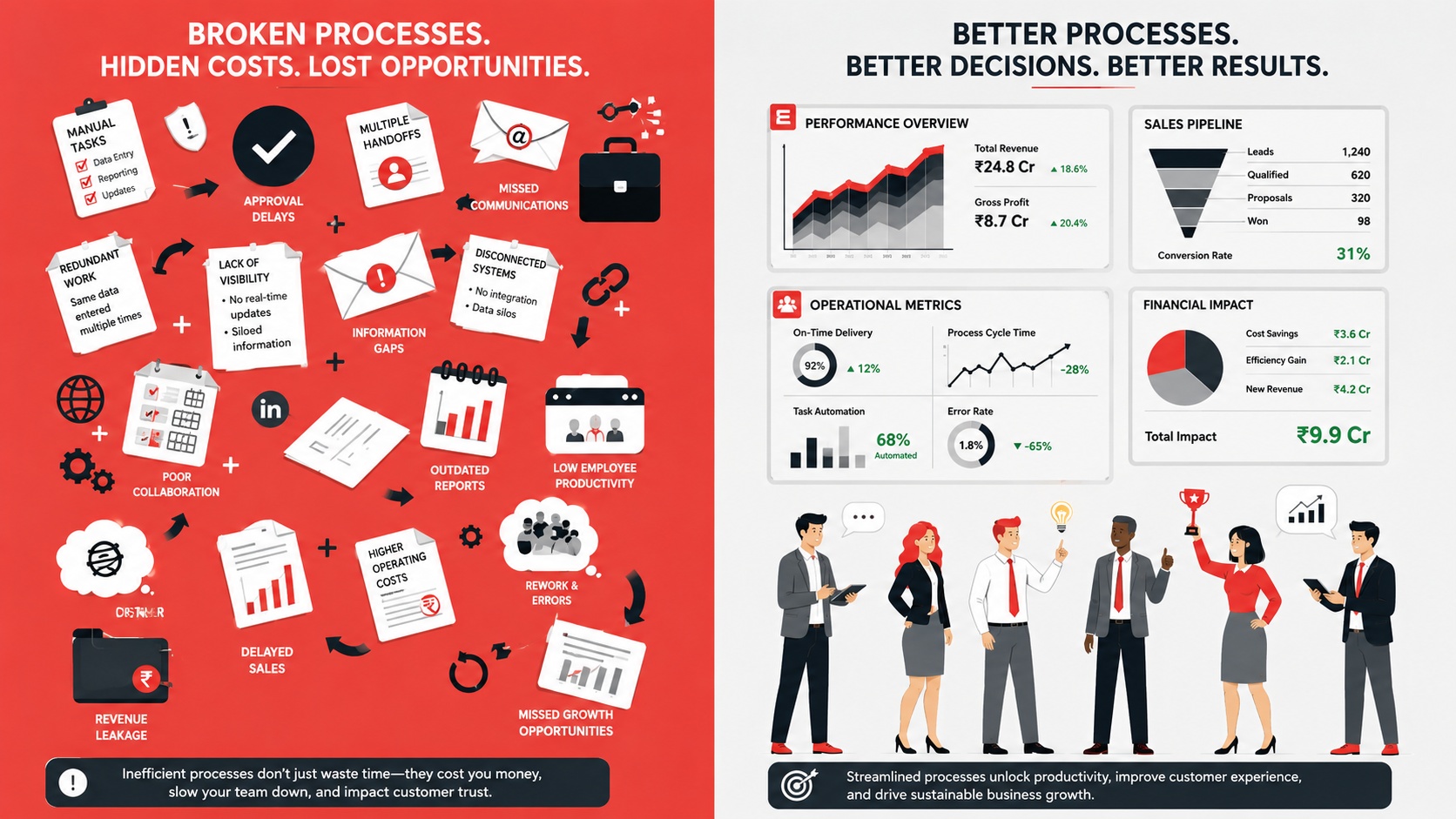
Software projects fail every day. Some never make it past the planning stage. Some launch months behind schedule. Others consume significant budgets only to end up unused by the very people they were built for. When that happens, the blame often falls on developers. "The code wasn't good enough." "The technology was wrong." "The team couldn't deliver." But after working with startups, enterprises, and growing businesses across different industries, we've noticed something interesting: Most software projects don't fail because of bad code. They fail because the wrong decisions are made long before development begins. In fact, by the time developers start writing code, many projects are already headed in the wrong direction. Let's look at why.
The Real Cost of Software Project Failure
Software failures are more expensive than most businesses realize. The cost isn't just the money spent on development. It's also:
- Lost market opportunities
- Delayed product launches
- Frustrated employees
- Unhappy customers
- Reduced competitive advantage
- Missed revenue
Many organizations assume software development is primarily a technical challenge. In reality, successful software development is often a business challenge first and a technical challenge second. Technology can solve problems. But it cannot solve unclear thinking.
The Biggest Myth About Software Development
Many businesses believe that if they hire talented developers, success is guaranteed. Unfortunately, that's not how software works. Imagine hiring the best architect in the world but giving them unclear requirements. The building would still fail. Software works the same way. Even the most skilled development team cannot build the right solution if:
- Goals are unclear
- Requirements constantly change
- Users aren't understood
- Success isn't defined
Good developers can build great software. But they cannot fix a broken strategy.
Warning Signs Your Software Project Is Heading Toward Failure
Before discussing the common mistakes, let's identify some early warning signs. If any of these sound familiar, your project may already be facing unnecessary risk. Everyone Has Different Expectations. Ask five stakeholders what the software should accomplish. If you receive five different answers, that's a problem.
1. Features Keep Being Added
Every week brings a new idea. Every meeting introduces another feature. The scope grows faster than progress.
2. Nobody Can Clearly Explain the User Problem
People can describe the product. But they can't explain why users truly need it.
3. Success Isn't Clearly Defined
How will you know if the project succeeds? If nobody can answer that question, you're operating without a target.
Mistake #1: Building Without a Clearly Defined Problem
This is the biggest reason software projects fail. Businesses often start with solutions. "We need an app." "We need a platform." "We need AI." But those aren't problems. They're potential solutions. The real starting point should be: "What problem are we solving?" For example: A logistics company may believe they need a mobile app. But after deeper analysis, the real problem might be:
- Lack of visibility into deliveries
- Inefficient communication
- Manual reporting
The app is simply one way to solve those issues. Successful software projects begin with problems, not features.
Mistake #2: Building Features Instead of Building Value
One of the fastest ways to create an unsuccessful product is to focus on feature quantity. Many teams assume: More features = more value. Users rarely think that way. Users care about outcomes. Think about the products you use every day. Most are successful because they solve a specific problem exceptionally well. Not because they offer hundreds of features. A simple product that solves one important problem will usually outperform a complicated product that tries to solve everything.
Mistake #3: Not Understanding the People Who Will Use It
This is where many projects quietly fail. The software gets built. The launch happens. The team celebrates. Then adoption never comes. Why? Because the product was designed around assumptions instead of users. Questions that often go unanswered:
- How do users currently solve this problem?
- What frustrates them?
- What would make their work easier?
- What are they actually trying to achieve?
Understanding users is often more valuable than understanding technology. Because users determine whether the software succeeds.
Mistake #4: Trying to Build Everything at Once
Many founders and business leaders fall into this trap. The idea is exciting. Everyone wants their feature included. The roadmap grows. Complexity increases. Momentum disappears. This is why successful startups often focus on an MVP (Minimum Viable Product). An MVP isn't a "cheap version." It's a focused version. It answers one critical question: Will users actually use this? Building smaller often leads to learning faster. And learning faster reduces risk.
Mistake #5: Choosing Technology Before Defining Requirements
This has become even more common in the age of AI. Businesses often ask:
- Should we use AI?
- Should we use Flutter?
- Should we use React?
- Should we migrate to the cloud?
These questions matter. But they're rarely the first questions. The first question should always be: What are we trying to achieve? Technology should support business goals. Not drive them.
Mistake #6: Treating AI Like a Feature Instead of a Tool
AI is currently one of the most requested additions to software projects. And understandably so. AI can create enormous value. But many projects approach it incorrectly. The conversation often begins with: "Can we add AI?" The better question is: "What problem will AI solve?" The most successful AI implementations typically improve:
- Productivity
- Decision-making
- Personalization
- Automation
- Customer experience
Adding AI without a clear purpose usually creates complexity, not value.
Mistake #7: Lack of Product Ownership
Projects fail when nobody owns the outcome. Not the task. The outcome. There is a difference. Task ownership sounds like: "The feature was delivered." Outcome ownership sounds like: "The feature solved the problem." Successful products have someone constantly asking:
- Is this creating value?
- Are users benefiting?
- Is this moving us toward our goal?
Without ownership, projects become collections of completed tasks rather than successful products.
Mistake #8: Ignoring Scalability Until Growth Happens
Many systems work perfectly for:
- 10 users
- 100 users
But struggle when growth arrives. Scalability isn't about overengineering. It's about making smart decisions early. Good architecture doesn't guarantee success. But bad architecture can absolutely limit it. The goal is balance: Build lean. Build smart. Build for growth.
Mistake #9: Measuring Success by Launch Day
One of the biggest mistakes businesses make is treating launch day as the finish line. Launch is not success. Usage is success. Adoption is success. Business impact is success. The real questions begin after launch:
- Are users returning?
- Are workflows improving?
- Are costs decreasing?
- Is revenue increasing?
- Are customers happier?
Software should be measured by outcomes, not releases.
What Successful Software Projects Have in Common?
After analyzing hundreds of successful digital products across industries, certain patterns consistently emerge. Successful software projects usually have: A Clearly Defined Problem Everyone understands why the project exists.
A Deep Understanding of Users
Decisions are based on real user behavior.
Focused Scope
Teams build what matters first.
Continuous Feedback
Products evolve based on actual usage.
Strong Collaboration
Business stakeholders and development teams work together.
Long-Term Thinking
The software is designed for future growth.
How We Think About Software at Arodos?
One lesson we've learned over the years is this: Software development isn't primarily about writing code. It's about solving problems. The Technology matters. The Architecture matters. The Code Quality matters. But none of those things matter if the wrong problem is being solved. That's why our approach always starts with understanding:
- The business
- The users
- The challenge
- The desired outcome
Only then do we begin discussing technology. Because successful software is rarely the result of brilliant coding alone. It's usually the result of clear thinking, good decisions, and a deep understanding of the people who will use it.
Final Thoughts
Most software projects don't fail because developers made mistakes. They fail because teams rush into development without enough clarity. The good news? These mistakes are avoidable. Before starting your next software project, spend less time thinking about:
- Features
- Frameworks
- Technologies
And spend more time understanding:
- The problem
- The user
- The outcome
Because when those three things are clear, everything else becomes easier. Software isn't about building more. It's about building the right thing.
Ready to build software that actually solves problems?
Start a Conversation